Jonathan Feicht's Website

  • Home
  • Math
    • Hands-On-Equations
    • Unit 1-Basic Number Sense >
      • Order of Operations
      • Understanding & Writing Basic Expressions
      • Powers of 10
      • Place Value
    • Unit 2 Operations with Decimals >
      • Rounding & Adding/Subtracting Decimals
      • Multiplying Decimals
      • Division of Decimals
    • Unit 3-Fractions >
      • Adding & Subtracting Fractions
      • Multiplying Fractions
      • Dividing Fractions
  • Social Studies
    • Unit 1-Bill of Rights, Citizenship & Due Process
    • Unit 2a: Civil War Overview & Causes >
      • Civil War Battles
      • Civil War People
      • Civil War Interactive Timeline
    • Unit 2b: Reconstruction
    • Changing America--The Turn of the Century >
      • Cattle Trails
      • McKinley & Roosevelt and Changing US Policy
      • Immigration and the American Melting Pot
    • World War I
    • The Roaring Twenties
    • Great Depression >
      • Culture of the 1930's
    • World War II >
      • WWII Events >
        • Pearl Harbor
        • D-Day
        • Iwo Jima
        • Hiroshima and Nagasaki
        • Holocaust
        • V-E & V-J Days
        • Formation of United Nations
      • WWII People
    • The Cold War >
      • Iron Curtain/Berlin Wall
      • Communism vs. Capitalism
      • Berlin Airlift
      • Space Race
    • The Civil Right's Movement >
      • The Crazy Sixties--Assassinations for Sure
    • America Since 1975 >
      • September 11, 2001
      • War on Terrorism
  • Science
    • Earth Science >
      • Deposition
      • Earthquakes
      • Faults
      • Volcanoes
      • Erosion
      • Weathering
      • Impact of Organisms
      • Seismological Studies
      • Flood Control
      • Beach Reclamation
    • Physical Science >
      • Physical Changes
      • Chemical Changes
      • Electricity
      • Static Electricity
      • Magnets vs. Electromagnets
    • Life Science >
      • Classifying Animals
      • Classifying Plants
      • Cells
      • Learned & Inherited Traits
      • Good Microorganisms
      • Bad Microorganisms
  • Things
    • Class of 2014-15 >
      • Eagle Time Research Links
    • Class of 2013-14 >
      • Holocaust Student Pages
      • WWII in the Pacific Student Pages
      • WWII on the Home Front
      • Axis vs. Allies Student Pages
    • 5th Grade Scores
    • Pictures >
      • My Pride and Joy
      • My Wildlife Photos
      • Sudan Photos
      • My Alaska Photo Album
      • My Saipan Photos
      • My Egypt Photo Album
      • My Ethiopia Photo Album
      • My Kenya Photo Album
      • My Swaziland Photo Album
      • My Uganda/Rwanda Photo Album
      • My Paris Photos
  • Resources for Teachers
  • 2nd Grade Enrichment Activities
    • Analogies

Microscopes and Magnification

S5L3 Students will diagram and label parts of various cells (plant, animal, single-celled, multi-celled).    
a. Use magnifiers such as microscopes or hand lenses to observe cells and their structure.  
b. Identify parts of a plant cell (membrane, wall, cytoplasm, nucleus, chloroplasts) and of an animal cell (membrane, cytoplasm, and nucleus) and determine the function of the parts.  
c. Explain how cells in multi-celled organisms are similar and different in structure and function to single-celled organisms.    

Microscopes and Magnifiers
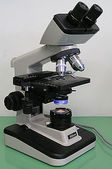
Picture
Microscopes are useful for looking closer at very tiny things. For an interactive tour of how to use a microscope click here. If you really enjoy looking at microscopic images under a microscope you might try the virtual microscope from Discovery Education.

Improvements in Health and Wealth

The reason I included this video was because it was connected to the paragraph to the right. It may be a bit complicated for most 10 year old kids to fully understand, but I think it does a great job charting the progress that has been made in health over the past 200 years. It is also very interesting to see how wealth has allowed countries to improve in health. Is it all because of microscopes? Absolutely not, but have microscopes played a large role in developing vaccines, finding medicines and helping us understand how diseases work? Certainly!

History of Cell Magnification


Robert Hooke is credited with being the first person to discover cells. He was looking at small piece of cork under a microscope lens and noticed "pores" or "cells" in it. Since that day in 1665 scientists have been trying to learn more about cells and thus more about all living things.

A few years later in 1674 Anton van Leeuwenhoek built a simple microscope and became the first person to describe bacteria. He also  began looking at blood, yeast and even insects under  a microscope. 

Now scientists can not only look at cells, but they can also see the parts inside of each cell and are able to determine the function of each part. Why would anyone need or want to know this? Mostly, the research is done to help doctors and health care professionals increase the amount of help they can provide to patients. In the United States in 1900, the average person lived to be 47 years old. In 1940 the average person in the U.S. lived to be 63 year old. Today in the U.S. the average person lives to be 77 years old. Why the difference? Vaccinations have been created and great advances have been made in the world of medicine. Thank you Mr. Microscope!
Powered by Create your own unique website with customizable templates.
  • Home
  • Math
    • Hands-On-Equations
    • Unit 1-Basic Number Sense >
      • Order of Operations
      • Understanding & Writing Basic Expressions
      • Powers of 10
      • Place Value
    • Unit 2 Operations with Decimals >
      • Rounding & Adding/Subtracting Decimals
      • Multiplying Decimals
      • Division of Decimals
    • Unit 3-Fractions >
      • Adding & Subtracting Fractions
      • Multiplying Fractions
      • Dividing Fractions
  • Social Studies
    • Unit 1-Bill of Rights, Citizenship & Due Process
    • Unit 2a: Civil War Overview & Causes >
      • Civil War Battles
      • Civil War People
      • Civil War Interactive Timeline
    • Unit 2b: Reconstruction
    • Changing America--The Turn of the Century >
      • Cattle Trails
      • McKinley & Roosevelt and Changing US Policy
      • Immigration and the American Melting Pot
    • World War I
    • The Roaring Twenties
    • Great Depression >
      • Culture of the 1930's
    • World War II >
      • WWII Events >
        • Pearl Harbor
        • D-Day
        • Iwo Jima
        • Hiroshima and Nagasaki
        • Holocaust
        • V-E & V-J Days
        • Formation of United Nations
      • WWII People
    • The Cold War >
      • Iron Curtain/Berlin Wall
      • Communism vs. Capitalism
      • Berlin Airlift
      • Space Race
    • The Civil Right's Movement >
      • The Crazy Sixties--Assassinations for Sure
    • America Since 1975 >
      • September 11, 2001
      • War on Terrorism
  • Science
    • Earth Science >
      • Deposition
      • Earthquakes
      • Faults
      • Volcanoes
      • Erosion
      • Weathering
      • Impact of Organisms
      • Seismological Studies
      • Flood Control
      • Beach Reclamation
    • Physical Science >
      • Physical Changes
      • Chemical Changes
      • Electricity
      • Static Electricity
      • Magnets vs. Electromagnets
    • Life Science >
      • Classifying Animals
      • Classifying Plants
      • Cells
      • Learned & Inherited Traits
      • Good Microorganisms
      • Bad Microorganisms
  • Things
    • Class of 2014-15 >
      • Eagle Time Research Links
    • Class of 2013-14 >
      • Holocaust Student Pages
      • WWII in the Pacific Student Pages
      • WWII on the Home Front
      • Axis vs. Allies Student Pages
    • 5th Grade Scores
    • Pictures >
      • My Pride and Joy
      • My Wildlife Photos
      • Sudan Photos
      • My Alaska Photo Album
      • My Saipan Photos
      • My Egypt Photo Album
      • My Ethiopia Photo Album
      • My Kenya Photo Album
      • My Swaziland Photo Album
      • My Uganda/Rwanda Photo Album
      • My Paris Photos
  • Resources for Teachers
  • 2nd Grade Enrichment Activities
    • Analogies
